Gowns galore
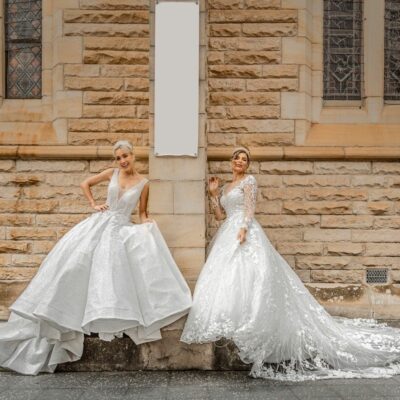
From ready-to-wear to couture gowns, you'll be spoiled for choice when it comes to wedding dresses
View now
Just because you want to get married doesn’t always mean you can.
Weddings, while fabulously exciting and fun (and a lot of work) have a legal side to them and, if you don’t fulfil the legal requirements, you cannot walk down the aisle.
The facts:
The legal aspects of getting married are specified in the Marriage Act 1961. It’s a federal law that applies to all weddings conducted in Australia.
Sydney based celebrant Martin Moroney says, “Shortly before the marriage can take place your marriage celebrant (civil or religious) requires you to sign a declaration that there is no legal impediment to your marriage.”
The document attests that you are
- That you are of marriageable age, 18 years or older
- That you are not already married to another person
- That you are not closely related (e.g. brother and sister) and there are no other circumstances that would be a legal impediment to the marriage
“Actually it’s pretty straightforward,” says Martin, a committee member at the Australian Marriage Celebrants Association. “Anybody aged 18 or over can get married. Marriage is possible if one of you is 16 or over and the other is 18 or older, but you have to get permission from the courts.”
You don’t have to be an Australian resident, and unlike many countries there is no residency requirement for a legal marriage.
“Plenty of couples elope to Australia and have wonderful marriage ceremonies here,” says Martin who also performs naming ceremonies and funerals, “It’s a blast!”
“Your marriage celebrant will not be asking you anything about your residency status, and we are specifically not permitted to give you any advice about migration and residency matters,” he says.
If you are expecting your marriage to assist an application for migration or residency please be sure to seek legal advice before getting married. You could be shooting yourself in the foot.
When can you get married?
The Marriage Act specifies a “cooling off period” before the marriage could take place. That’s the time between you declaring officially that you intend to marry and the day that you are able to walk down the aisle together.
The intention is, of course, to reduce the number of couples who marry in haste to repent at leisure.

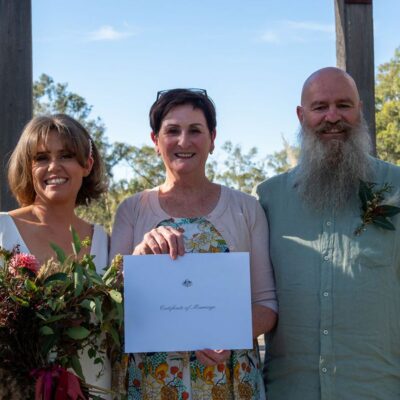
Martin and one of his brides, Emily
Your Marriage celebrant will get you to sign a legal document, a “Notice of Intended Marriage” (NIOM) in his/her presence. You are both required to sign, however, if only one of you is available (perhaps working interstate etc), then one party can initially sign.
Once that is done, you are entitled to get married one month and a day after you’ve signed the NIOM. So, if you’ve signed on, say the 28th of July, you can marry on 29th of August.
Be warned, the time rules with regards to NIOMs are very strict. If your Celebrant breaks the rules and allows you to marry before then, he/she could end up behind bars.
“There are a number of exceptional circumstances in which the authorities will allow this time to be shortened,” says Martin, “If you simply have stuffed it up and got the dates wrong, sorry, you have no chance.
On the other hand if you have been posted abroad for your work, or someone important to your marriage is so ill that they may not last until the wedding, then you may apply for the time to be shortened to allow an immediate marriage.”
What documents do I need?
Your marriage celebrant is required to establish your date and place of birth, and your identity.
“For most couples born in Australia and never previously married, all you need are your birth certificates,” says Martin. “If you were born in Australia, the celebrant has to see and note the details of your birth certificate on your NOIM. There are no exceptions to this requirement. No Australian birth certificate, no marriage. That’s OK, replacement Australian birth certificates are easy to obtain.”
The celebrant will also ask to see some photo ID, usually your driver’s licence.
If you were born outside Australia, your celebrant can use your non-Australian passport to establish your date and place of birth and your identity. An Australian passport is not sufficient for the date and place of birth.
“It may sound strange, but those are the rules,” says Martin. “It’s always good to use your non-Australian birth certificate if you have one, because your birth certificate has details of your parents and so on which are already noted in the public record.”
“If you get these details accurately transferred to your marriage documents (as opposed to relying on your memory),” says Martin “in 60 years time the trail of names will match up correctly when your children search the public record for their family tree.”
If you do not possess a birth certificate or a non-Australian passport because you are a refugee or so forth, your marriage celebrant will help you find other ways of resolving these situations.
Not your first time?
Your Marriage celebrant is required to establish your marital status.
At first pass your celebrant will ask if you have been married previously. If you say “no” then that’s it! He/she will note on your NOIM “Never validly married”.
If you are not truthful you can be committing a serious offence, so don’t bend the facts if you were married and divorced years ago.
If you have been married previously, your celebrant will want to establish how the marriage was terminated.
The three options are; a dissolution (divorce), the death of your partner, or an annulment of the marriage.
If you have been divorced, you must produce your divorce orders. No papers, no marriage.
“Be careful with this one,” warns Martin. “Don’t plan your wedding and your divorce party on the day your divorce is promised to be granted. Many brides have been caught out by the timing. Your divorce becomes final one month and a day after the date the divorce is granted.”
If your spouse has unfortunately died, your celebrant will ask to see the death certificate.
And finally, regarding annulled marriages, a small number of people have had marriages annulled by the Family Court, so in that case you have to produce the documents. Once again, don’t get caught out, the annulment has to be from the Family Court, not some religious institution.
It should be noted that while you won’t need all these documents when you sign your NOIM, but you will have to produce them before the marriage can take place. Couples who are coming to Australia to marry must make contact with a celebrant before they arrive in Australia who will organise their NOIM with them in good time for the marriage.
Are you closely related?
You cannot legally marry a close relative, although you are allowed to marry a first cousin. If you have been adopted into the same family you are not allowed to marry.
Where can I get married?
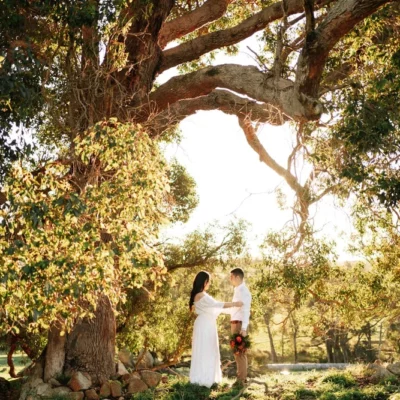
“If you have a civil ceremony you can get married anywhere, at any time – even in the street, up a tree or in a hot air balloon – provided your witnesses can hear your repeat your marriage vows,” says Martin. “It’s amazing!”
Some venues have to be booked, even public parks.
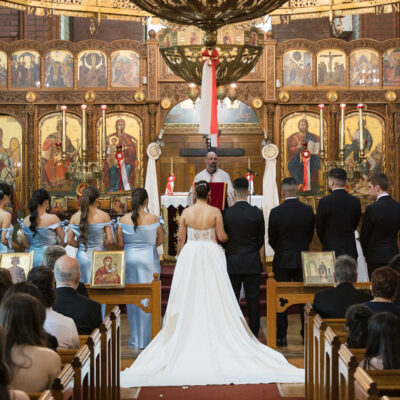
If you want to get married in your church, the best thing to do is to ask your minister for help and advice. Although the legal requirements for marrying in a church are the same as if you are holding a civil service, each church goes about things in a different way and may have different customs, traditions or rules that need to be adhered to.
For a civil ceremony, all you need is a marriage celebrant armed with the correct documents, two witnesses and your fiancé, and you are ready to go.
“You don’t even have to know your witnesses,” says Martin. “It sounds incredible, but you can grab two people who are passing by, as long as they’re both over the age of 18 years.”
Visit Martin Moroney’s website
Well .. a declaration form before marriage… that’s something new for ears!!